

Unearthing the Human Dimension of Conflict.
Specialising in the wartime experience of the German soldier from the Napoleonic era to 1945. Reconstructing military culture through frontline diaries, letters, battlefield archaeology and public history.
Uncovering the industrial battlefield bone trade
One of three founders · 113 soldiers recovered
German Historical Consultant (UK National Commemoration)

Robin Schäfer
Historian · Author · ProducerReconstructing the Reality of War
Uncovering unvarnished frontline history through primary source documents, battlefield excavations and international publications.
Core Methodology"My research is defined by a focus on the human dimension of conflict, reconstructing the realities of military culture through the 'ego-documents' — diaries and letters — of those who lived through it."
I am a German military historian, author and producer specialising in the wartime experience of the German soldier from the Napoleonic Wars to the end of the Second World War.
Most recently, my work has garnered global attention following a breakthrough discovery regarding the Battle of Waterloo. In collaboration with my writing partner and friend, Dr Bernard Wilkin, I solved the enduring mystery of the missing burials on the 1815 battlefield. Our research uncovered the forgotten and harrowing history of the industrial exploitation of human remains, revealing how battlefield bones were harvested for use in the sugar industry. This finding went viral worldwide, trending across international media and academic platforms, and has since reshaped the historical understanding of post-Napoleonic Europe.
My engagement with history extends deeply into journalism. I regularly write opinion pieces for The Telegraph, and I contribute research to major newspapers in Britain and across Europe, including Germany's national broadsheet the Frankfurter Allgemeine Zeitung (FAZ) and the Daily Mail. In broadcasting, I have served as a historical consultant for high-profile productions such as the BBC's Great War Interviews and the acclaimed Netflix series Voices of Liberation, alongside my regular work as a producer and writer for HistoryHit.tv.
During the First World War Centenary, I played a central role in British national commemorations. I acted as a consultant for the UK's Department for Culture, Media and Sport (DCMS) and the UCL Institute of Education, and in 2016 I was honoured to serve as the German Historical Consultant for the British National Commemoration of the Centenary of the Battle of the Somme.
My commitment to unearthing the physical remnants of the past is best exemplified by the Dig Hill 80 project, an award-winning archaeological excavation in Flanders I co-founded in 2017 as one of three founders, alongside Professor Peter Doyle and Simon Verdegem. The project recovered the remains of 113 fallen soldiers, offering a poignant new perspective on trench warfare.
In addition to my field and media work, I am the creator and former historical editor of Iron Cross Magazine. I have also curated major exhibitions, including Empire, Faith & War: The Sikhs and World War One in London and Red Baron: The Life and Times of Manfred von Richthofen, currently on show at the Hooge Crater Museum in Flanders, and served as a curatorial advisor for the D-Day Story Museum in Portsmouth. I continue to work at the intersection of academic research and public history, dedicated to exploring the complexities of the human experience in times of war.
The Real Fate of the Waterloo Fallen

- "The real fate of the Waterloo fallen. The exploitation of bones in 19th century Belgium", Journal of Belgian History, LIII (2023), with Bernard Wilkin and Tony Pollard
- Bones of Contention: The Industrial Exploitation of Human Bones in the Modern Age (2024), with Bernard Wilkin
- Jusqu'à la moëlle (2025), French edition
Together with Dr Bernard Wilkin of the State Archives of Belgium, Robin Schäfer has solved one of military history's most enduring mysteries: what happened to the dead of Waterloo? The battle of 18 June 1815 left up to 20,000 men and 10,000 horses dead on the field, yet only a handful of human skeletons have ever been found there.
Drawing on period newspapers, medical journals and archival records, Schäfer and Wilkin identified the true culprit: Europe's booming beet-sugar industry. Sugar refineries needed vast quantities of bone char to filter and whiten their sugar, and the mass graves of old battlefields offered a cheap and plentiful supply. One such refinery operated only a few miles from Waterloo, and in 1835 a company bought the right to excavate the battlefield itself.
Waterloo was only the tip of the iceberg.
What began as a search for the missing dead of a single battlefield uncovered a European phenomenon of enormous scale. Schäfer and Wilkin are the first to paint a full picture of the bone craze that swept post-Napoleonic Europe, when the burial grounds of the Napoleonic and earlier wars were dug up across the continent, and of the industrial exploitation of human remains later driven by the sugar industry. Their research offers the most convincing explanation yet for the missing Waterloo dead and changes how we understand the fate of the fallen of an entire era.
Bones in the attic
The research also led to a remarkable discovery, though not in the ground. In late 2022, after a talk on the research, a local collector revealed that he had kept the bones of what appear to be four Prussian soldiers, killed in the fighting for Plancenoit, in his attic for some forty years. Further remains, recovered decades earlier by metal detectorists between Hougoumont and the Lion's Mound, then came to light in another private household. Together, the remains of up to ten British and Prussian soldiers form the largest body of Waterloo casualties ever found. They are now being examined by specialists in Belgium, with the aim of giving these men the dignified burial they were denied in 1815.
- The Washington PostUSA, 2024"Were skeletons from Waterloo and U.S. soldiers dug up for fertilizer?"
- CNNUSA, 2023"Remains of soldiers killed at the Battle of Waterloo found in Belgian attic"
- History HitUK, 2023"Bones in the Attic: The Forgotten Fallen of Waterloo"
- The Brussels TimesBelgium, 2023"Bring out your dead, says Waterloo historian"
- Paris MatchBelgium, 2022 · in French"Le lourd secret de la bataille de Waterloo : où sont passées les 25 000 dépouilles ?"
- NOSNetherlands, 2022 · in Dutch"Gebeente van doden van de Slag bij Waterloo gebruikt in de suikerindustrie"
- VRT NWSBelgium, 2022 · in German"Gruselig, aber wahr: Gebeine der Gefallenen in Waterloo von der Zuckerindustrie verarbeitet"
- AGIItaly, 2022 · in Italian"La tremenda fine degli eroi di Waterloo usati per sbiancare lo zucchero"
- AraSpain, 2022 · in Spanish"Los cadáveres de la batalla de Waterloo se robaron para hacer azúcar"
Books & Research Monographs
Uncompromising accounts of combat history, transnational studies and archival discoveries.

Fritz and Tommy
"One of the few genuinely transnational books about the First World War."
— Dan Snow"This is a book whose content is likely to be pillaged by future writers." — The Western Front Association

Blood, Dust and Snow
"Unvarnished, absorbing, gritty and pulling no punches."
— Dr Peter Caddick-AdamsDiaries of a Panzer Commander in Germany and on the Eastern Front (1938–1943).

Bones of Contention
"They enable us to follow this surprising journey of the dead."
— Charles BonaparteThe industrial exploitation of human bones on battlefields in the modern age. Co-authored with Dr Bernard Wilkin.
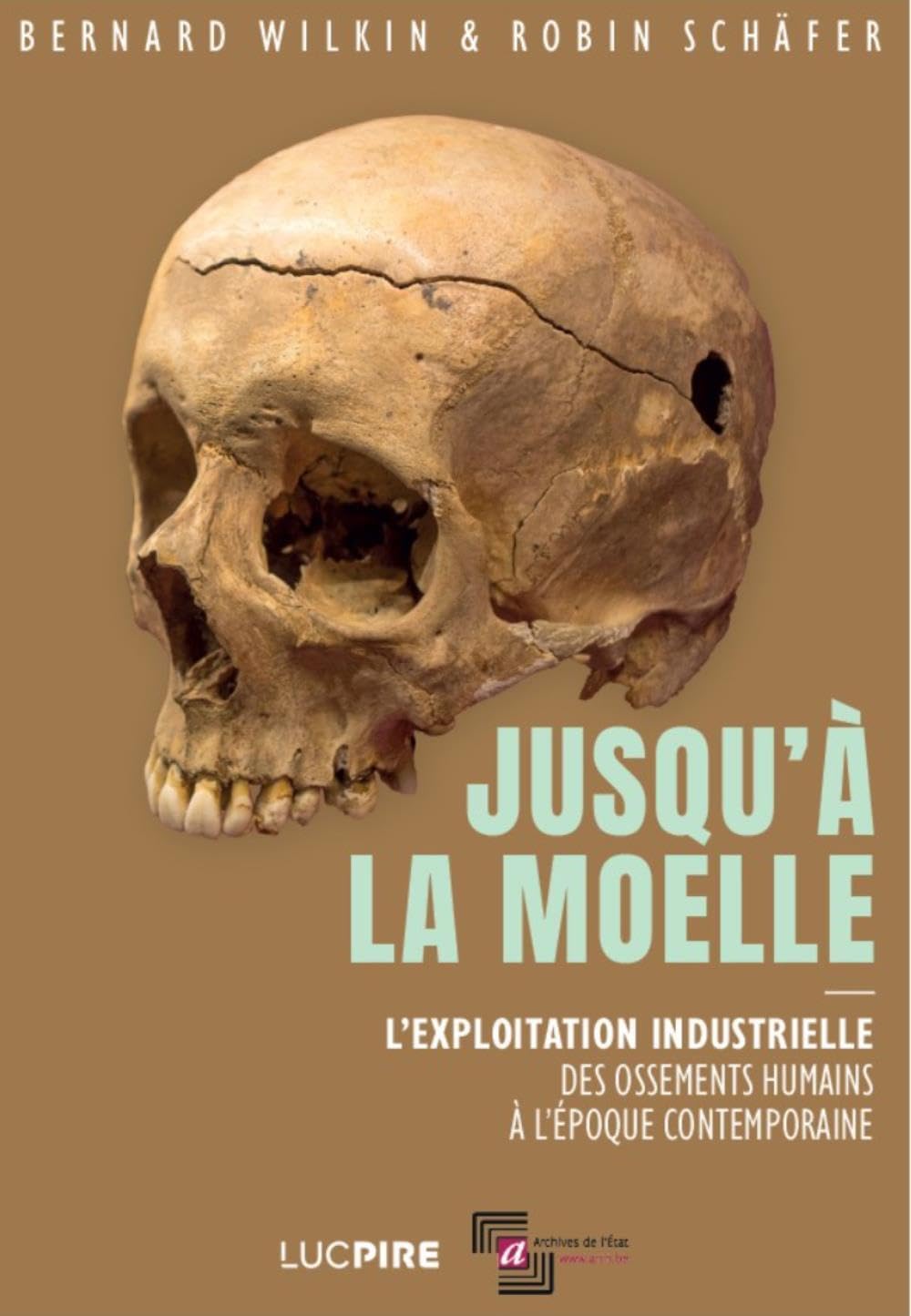
Jusqu'à la Moelle
L'exploitation industrielle des ossements humains à l'époque contemporaine.

Memoirs of German Officers
Annotated memoirs of German officers in British service, uncovering military command culture and frontline perspectives.

The Iron Cross
A comprehensive cultural and combat history, 1813–2008.
Documentaries & Media
Historical consultant, writer and presenter for BBC, Netflix and HistoryHit.tv.
Voices of Liberation (Netflix)
Historical consultancy for the acclaimed WWII documentary series following liberation routes across Europe.
Uncensored German Account: Russia 1941
Specialist historical presentation detailing uncensored original soldier diaries from Operation Barbarossa.
Operation Barbarossa: Tank Commanders
Detailed analysis of primary German armoured logbooks during the initial phase of the Eastern campaign.
Press & Research Features
 FAZ · Waterloo
"Waterloo-Fälschungen entlarvt: Historiker decken Täuschung auf"
Read Article ↗ FAZ · Archaeology
"Schlacht von Waterloo: Forscher finden Überreste von preußischen Soldaten"
Read Article ↗ FAZ · WWI
 FAZ · Investigation
"Wie das Gemälde eines Namenlosen zu einer fast vergessenen Bluttat führte"
Read Article ↗ Dig Hill 80
"The Pompeii of World War One: Remains of 113 soldiers recovered in Flemish field"
Read Article ↗ Waterloo
"Now we know where the dead went! — Did grave robbers plunder battlefields?"
Read Article ↗ Waterloo
"Were bones of 1800s battlefield dead dug up for fertilizer and sugar?"
Read Article ↗ WWI · Aviation
"Praise for Red Baron's brother from father of British ace he killed"
Read Article ↗Media Inquiries & Collaboration
Available for television and film consultancy, publishing queries, print commissions, public lectures and academic research collaborations.